
Hydrolyzed Bovine Collagen Peptides, Testosterone, and the Brain Fog Question: Is Tirzepatide a Peptide or Is Something Else Affecting Your Mood and Focus?
You do not feel like yourself anymore
You forget simple things.
You feel flat or irritable for no clear reason.
Your motivation is gone.
Your weight keeps climbing even though you are trying.
You tell your doctor you feel foggy and off.
You are told stress is the problem.
Or that this is just part of getting older.
Patients say this all the time.

“I don’t feel sharp anymore.”
“I’m not depressed, I just don’t feel like me.”
“I feel stuck in my own head.”
If this sounds familiar, hormones may be part of the picture.
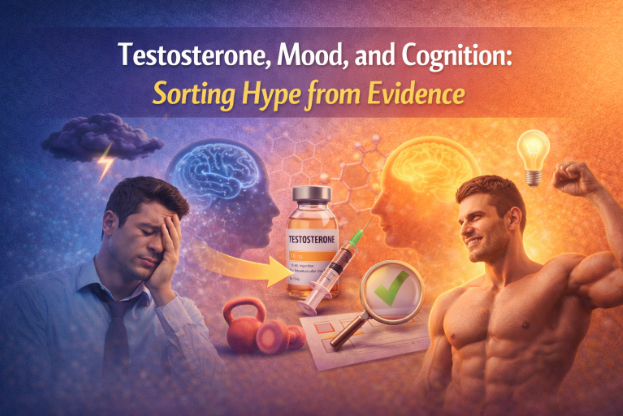
How Testosterone Affects Mood and Thinking
Testosterone is not just about muscle or sex drive.
It plays a role in how your brain works.
Healthy testosterone levels help support:
- Motivation and drive
- Clear thinking
- Emotional balance
- Confidence and resilience
When testosterone drops, many people notice:
- Brain fog
- Low mood
- Irritability
- Poor focus
This is not hype. This is how hormones and the brain talk to each other.
Why Weight Gain Often Shows Up at the Same Time
This is something patients notice but rarely get an explanation for.
When testosterone is low, your body:
- Burns fewer calories
- Builds less muscle
- Stores fat more easily
- Feels more inflamed
That is why weight gain, brain fog, and low mood often show up together.
You are not failing.
Your metabolism and hormones are struggling.
What the Evidence Really Shows
There is a lot of noise online.
Some people promise testosterone will fix everything.
Others dismiss it completely.
The truth is in the middle.
Low testosterone is linked to changes in mood, focus, and body composition.
Raising levels without understanding the cause does not fix everything.
That is why context and testing matter.
Is Tirzepatide a Peptide and Why People Ask About It
Yes. Tirzepatide is a peptide.
Peptides are small messengers that tell your body how to act.
Semaglutide and tirzepatide help control appetite and blood sugar.
Many people look into these because weight loss feels impossible and brain fog feels overwhelming.
Patients tell us:
“I just want to feel better.”
“I don’t want to mask the problem.”
“I want my body and brain to work again.”
Peptides can help some people short term.
They do not fix hormone imbalance or brain fog by themselves.
Conventional Medicine vs Functional Medicine
Conventional medicine often looks at one number
If testosterone is inside a wide lab range, the conversation ends.
Mood changes are brushed off.
Brain fog is blamed on stress.
Weight gain is blamed on lifestyle.
Functional medicine looks at patterns
We ask how you feel and why changes started.
We use advanced testing to look at:
- Total and free testosterone
- Binding proteins
- Cortisol and stress response
- Inflammation and insulin resistance
This helps explain why your brain and body feel off even when labs look “normal.”
Supporting the Brain and Body Together
In functional medicine, we do not chase quick fixes.
We look at sleep, stress, nutrition, movement, and recovery.
Some people benefit from foundational support like hydrolyzed bovine collagen peptides to support joints, gut health, and inflammation so the body can heal and respond better overall.
When the body feels supported, the brain often follows.
Why Your Experience Matters
If you feel foggy every day, that matters.
If your mood feels off and weight keeps climbing, that matters.
If you feel dismissed, that matters too.
You are not imagining this.
Your symptoms are telling a story.
Want to Learn More Before Making Any Decisions?
If you are tired of guessing and want to understand what is really driving weight gain, brain fog, and mood changes, start with education.
Our podcasts and webinars break down hormones, metabolism, and why so many people feel stuck despite “normal” labs.
No pressure.
No rushing into medications.
Just clear explanations that help you finally understand what your body needs.
When the noise fades, the path forward becomes much clearer.